Ezra Pound’s concise poem, readily available as a PDF, captures a fleeting moment of beauty amidst urban life, sparking diverse critical analyses and scholarly debates.
Numerous resources offer summaries, thematic explorations, and insightful quotes from this pivotal work of Imagist poetry, revealing its lasting impact.
Scholarly articles, including deconstructive analyses, delve into the poem’s complexities, while online platforms provide accessible interpretations for students.
Historical Context of the Poem
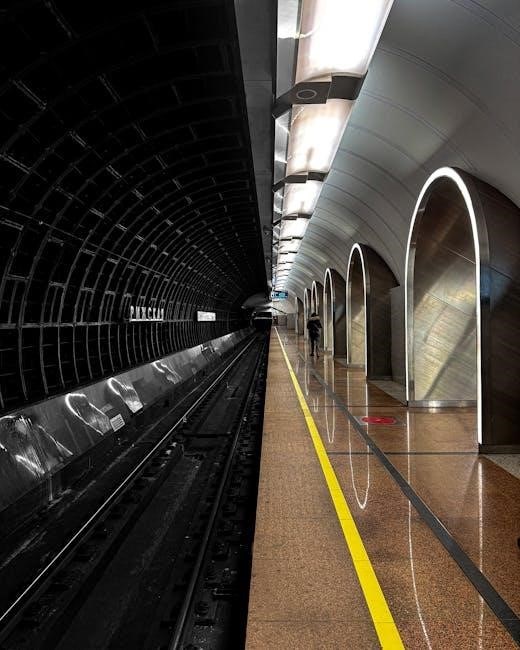
“In a Station of the Metro” emerged from a period of rapid modernization and artistic experimentation in the early 20th century. Pound penned the poem in 1913, a time when Paris was a magnet for artists and writers, fostering a vibrant exchange of ideas.
The rise of industrialization and urban sprawl profoundly impacted the artistic landscape, leading to a search for new forms of expression. The poem’s genesis, documented in various PDF analyses, reflects this context, capturing a fleeting moment within the bustling Parisian Metro.
This era also witnessed the burgeoning of Imagism, a movement Pound actively championed, advocating for precision, clarity, and direct treatment of the image. The poem’s concise form and vivid imagery are direct results of this artistic philosophy, readily explored in available scholarly resources.
Ezra Pound and the Imagist Movement
Ezra Pound was a central figure in the Imagist movement, a revolutionary force in early 20th-century poetry. He actively promoted its principles: directness, precision, and economy of language, rejecting Victorian sentimentality.
“In a Station of the Metro”, often studied via accessible PDF resources, serves as a quintessential example of Imagism. The poem embodies the movement’s focus on presenting a clear, sharply defined image without unnecessary embellishment.
Pound’s commitment to Imagism stemmed from a desire to revitalize poetry, stripping it down to its essential elements. He believed in “treating the thing,” presenting images as they are, rather than interpreting them. This philosophy is clearly demonstrated in the poem’s stark, evocative imagery, as detailed in numerous critical analyses.
The Poem’s Initial Publication and Reception
“In a Station of the Metro” first appeared in 1913 in the literary magazine Poetry, a key outlet for modernist verse. Its publication marked a significant moment for Imagism, showcasing the movement’s radical new aesthetic to a wider audience.
Initial reception was mixed, as the poem’s brevity and unconventional form challenged traditional poetic expectations. Many readers, accustomed to more elaborate verse, found it perplexing, though readily available as a PDF today.
However, the poem quickly gained recognition for its innovative use of imagery and its concise expression of a powerful emotional experience. Critical discussions, documented in scholarly articles, began to explore its significance, solidifying its place in modernist literature.
A Close Reading of the Poem’s Text
Pound’s poem, often studied via PDF resources, demands careful attention to its two-line structure and evocative imagery, revealing a fleeting, impactful vision.
The Two-Line Structure and its Significance
“In a Station of the Metro”, frequently accessed as a PDF for academic study, is remarkable for its brevity and impactful structure. The poem’s two-line form isn’t arbitrary; it mirrors the suddenness of the poet’s perception.
This concise arrangement forces a direct juxtaposition of the urban scene – “the apparition of these faces in the crowd” – with the natural image of “petals on a wet, black bough.”
The lack of connective tissue between the lines compels the reader to actively forge the connection, experiencing the moment of recognition alongside Pound. This structural choice embodies Imagist principles, prioritizing precision and direct presentation over elaborate explanation.
The poem’s form is as crucial to its meaning as the imagery itself, creating a powerful, concentrated aesthetic experience.
Analysis of the First Line: “The apparition of these faces in the crowd”
The opening line of “In a Station of the Metro,” often studied via PDF resources, immediately establishes a sense of fleeting perception. The word “apparition” is key, suggesting something ghostly, ephemeral, and almost unreal – a momentary glimpse rather than a sustained observation.
These aren’t simply faces; they appear and then potentially vanish, mirroring the transient nature of modern urban life. The “crowd” itself represents anonymity and the overwhelming sensory input of the city.
Pound doesn’t offer detailed descriptions, instead focusing on the impression – a collective of faces briefly illuminated, creating a striking visual moment. This line sets the stage for the poem’s central metaphor.
Analysis of the Second Line: “Petals on a wet, black bough.”
The second line of Pound’s poem, frequently examined in PDF analyses, provides a startling yet evocative comparison. “Petals on a wet, black bough” isn’t a literal description of the metro station, but a metaphorical resonance with the “apparition” of faces.
The image is delicate and beautiful, contrasting with the harshness often associated with urban environments. The “wet, black bough” suggests a somber, perhaps even melancholic, backdrop, highlighting the fragility of beauty.
This juxtaposition creates a powerful emotional impact, transforming a mundane scene into a moment of profound aesthetic experience, a core tenet of Imagism.
The Use of “Apparition” and its Connotations
The word “apparition,” central to Pound’s poem and frequently discussed in PDF studies, carries significant weight. It suggests something fleeting, ghost-like, and almost unreal – a momentary glimpse rather than a sustained observation.
This choice isn’t accidental; it emphasizes the ephemeral nature of the experience, the transient beauty of the faces in the crowd. “Apparition” implies a sense of mystery and otherworldliness, elevating the scene beyond the ordinary.
The term hints at a revelation, a sudden and unexpected appearance, aligning with the Imagist goal of presenting a precise image with maximum emotional impact.

Themes Explored in the Poem
PDF analyses reveal core themes: the fleeting beauty of modern life, urban alienation, and the search for meaning within fragmented experiences, powerfully condensed.
The Ephemeral Nature of Beauty
PDF resources examining “In a Station of the Metro” consistently highlight the poem’s focus on beauty’s transient quality. The “apparition” of faces suggests a fleeting glimpse, a momentary perception that vanishes as quickly as it appears.
This impermanence is reinforced by the image of “petals on a wet, black bough,” evoking delicate, fragile forms susceptible to decay and loss. Pound doesn’t offer lasting beauty, but a snapshot of a beautiful moment.
The poem’s brevity itself mirrors this ephemerality; it’s a quick impression, mirroring the speed of modern urban life and the fleeting nature of human connection. Critical analyses within PDF documents emphasize this central theme.
Urban Life and Modernity
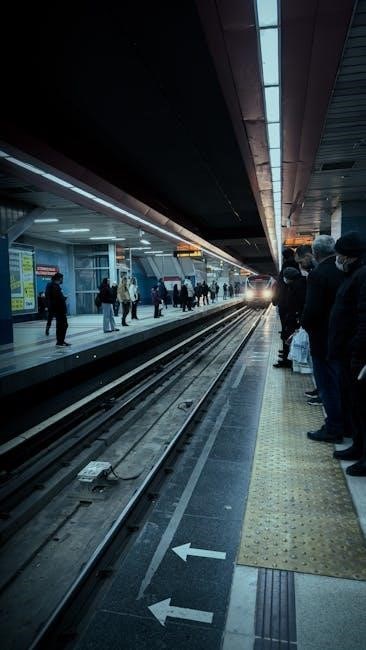
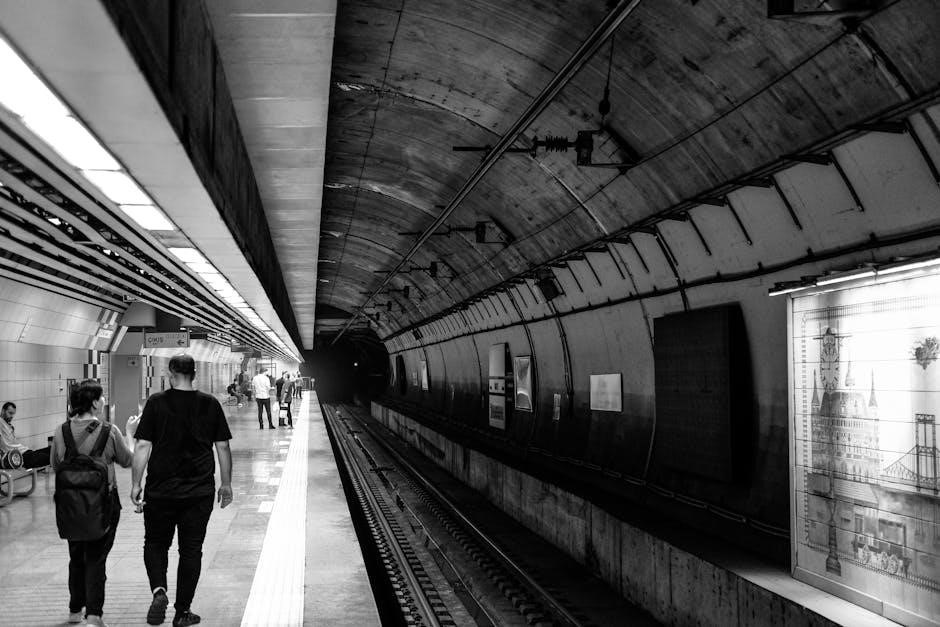
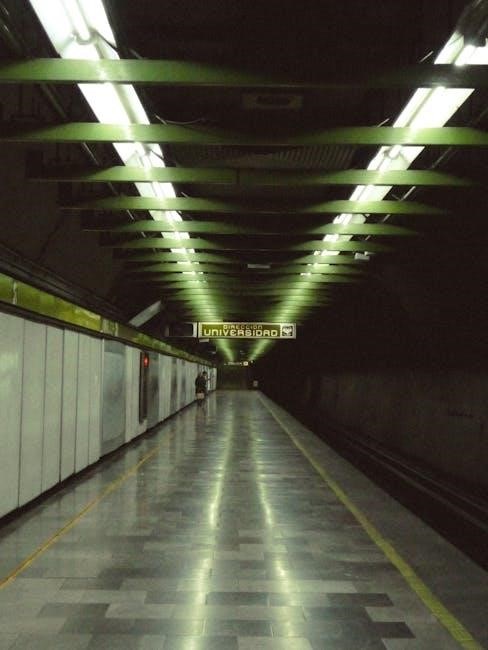
PDF analyses of “In a Station of the Metro” frequently position the poem as a quintessential expression of early 20th-century modernity. The setting – a bustling metro station – embodies the anonymity and rapid pace of urban existence.
Pound’s poem doesn’t romanticize city life; instead, it captures a fragmented, fleeting experience within it. The “crowd” represents the impersonal nature of the modern metropolis, while the poem’s concise form reflects the fragmented consciousness of the modern subject.
Scholarly resources, often available as PDFs, demonstrate how Pound uses this urban scene to explore themes of alienation and the search for meaning in a rapidly changing world.
The Power of Visual Imagery
“In a Station of the Metro” is celebrated for its striking visual imagery, a core tenet of Imagism, and extensively discussed in available PDF analyses. The poem eschews narrative or explicit emotion, relying instead on a precise juxtaposition of images to evoke a feeling.
The “apparition of these faces” and “petals on a wet, black bough” create a vivid, sensory experience for the reader. These images aren’t merely descriptive; they function symbolically, suggesting a connection between human beauty and natural forms.
Critical resources, often found as PDFs, highlight how Pound’s masterful use of imagery transcends literal representation, offering a moment of epiphany and aesthetic revelation.
The Search for Meaning in a Fragmented World
“In a Station of the Metro” reflects a modern sensibility grappling with fragmentation, a theme explored in numerous PDF analyses of the poem. Emerging from a period of rapid social and technological change, Pound’s work captures the fleeting, disconnected experiences of urban life.
The poem’s brevity and lack of conventional structure mirror the sense of disorientation and loss prevalent in the early 20th century. The juxtaposition of images—faces and petals—suggests a yearning for connection and beauty within a chaotic world.
Scholarly PDF resources demonstrate how Pound sought to find moments of clarity and meaning amidst the perceived fragmentation of modern existence through precise, evocative imagery.

Symbolism and Imagery
PDF analyses reveal how Pound employs potent symbolism: “faces” represent humanity, while “petals” signify fragile beauty, all within a stark urban setting.
The Symbolism of “Faces” in the Crowd
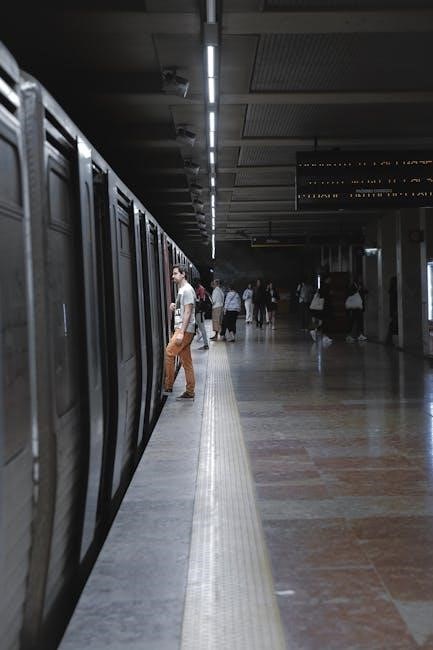
PDF resources consistently highlight the multifaceted symbolism embedded within the “faces” appearing in Pound’s crowded metro station. These aren’t individualized portraits, but rather fleeting apparitions, suggesting the anonymity and transience of modern urban existence.
The crowd itself embodies the collective unconscious, a sea of humanity briefly illuminated before dissolving back into the flow. Each face, though indistinct, carries the weight of individual experience, yet remains largely unknown to the observing poet.
Interpretations range from viewing the faces as symbols of lost potential to representations of the beauty found within everyday life. The sheer number emphasizes the overwhelming nature of the city and the difficulty of genuine connection.
Ultimately, the “faces” function as a powerful symbol of the human condition, caught between individuality and anonymity.
The Significance of “Petals” as a Metaphor
PDF analyses frequently emphasize the crucial role of “petals” as a central metaphor in Pound’s poem. They represent a delicate, ephemeral beauty juxtaposed against the harshness of the “wet, black bough,” symbolizing the urban environment.
The petals aren’t simply decorative; they embody a fleeting moment of grace and aesthetic revelation. Their fragility underscores the transient nature of beauty and the difficulty of capturing it in language.
Scholars suggest the petals evoke associations with spring, renewal, and the natural world, offering a momentary escape from the industrial cityscape. This contrast highlights the poem’s core tension between nature and modernity.
The metaphor’s power lies in its ability to transform a mundane observation into a profound aesthetic experience.
The Imagery of “Wet, Black Bough” and its Associations
PDF resources consistently dissect the “wet, black bough” imagery, revealing its complex associations. The “black bough” immediately evokes a sense of darkness, industrialization, and the stark realities of urban life, contrasting sharply with the delicate petals.
The “wet” quality adds a layer of melancholy and perhaps even decay, suggesting a somber atmosphere. It hints at the grime and dampness inherent in a metropolitan environment like the Paris Metro.
Scholarly interpretations often link the bough to the structural elements of the metro station itself – the iron supports and beams – further grounding the image in the poem’s setting.
This imagery creates a powerful visual tension, highlighting the fleeting beauty found within a bleak landscape.
Color Imagery and its Impact
PDF analyses of “In a Station of the Metro” emphasize the poem’s striking color contrast. The starkness of “black” dominates the second line, immediately establishing a somber and potentially oppressive tone, reflective of the urban setting.
This darkness serves as a backdrop for the implied delicate hues of the “petals,” creating a visual tension and highlighting their ephemeral beauty. The absence of explicit color description for the petals amplifies their impact.
Scholars note how this limited palette contributes to the poem’s Imagist principles – focusing on precise, concrete detail rather than elaborate description.
The color imagery, though minimal, powerfully conveys a sense of fleeting beauty against a backdrop of urban decay.

Deconstructive Analysis of the Poem
PDF resources reveal deconstruction challenges binary oppositions within the poem—crowd/individual, apparition/reality—undermining stable meaning and traditional interpretations.
Applying Deconstruction to Pound’s Work
Deconstruction, as applied through PDF analyses of “In a Station of the Metro,” dismantles the poem’s apparent simplicity, revealing inherent instability. The text resists a singular, definitive reading, highlighting the arbitrary nature of language and meaning.
Traditional interpretations seeking a harmonious connection between faces and petals are questioned; instead, the poem exposes a gap, a difference, between the signifier and signified. This approach, detailed in academic papers available as PDFs, emphasizes the poem’s self-contradictory elements.
The poem’s brevity itself becomes a site of deconstruction, forcing a focus on absence and what remains unsaid, ultimately challenging the notion of poetic closure.
Binary Oppositions within the Poem
A deconstructive reading, often found in PDF analyses, reveals inherent binary oppositions within “In a Station of the Metro.” The poem sets up contrasts: crowd versus individual, human faces against natural petals, and the artificiality of the metro station versus organic growth.
These oppositions aren’t resolved but rather destabilized, as the poem suggests a fleeting equivalence between them. The “apparition” of faces blurs the line between presence and absence, reality and illusion, as explored in scholarly PDFs.
Furthermore, the darkness of the “wet, black bough” contrasts with the implied luminosity of the faces, creating a tension that resists easy categorization.
Challenging Traditional Interpretations
Traditional readings of “In a Station of the Metro,” often summarized in accessible PDF guides, frequently focus on the poem’s aesthetic beauty and its embodiment of Imagist principles. However, deconstructive analyses, readily available as scholarly PDFs, challenge these conventional views.
These critiques question the assumed stability of meaning, arguing that the poem’s brevity and ambiguity resist definitive interpretation. The connection between faces and petals isn’t a simple metaphor but a disruption of logical association.
Furthermore, the poem’s focus on a fleeting moment undermines notions of lasting truth or universal beauty, prompting a re-evaluation of its thematic concerns.
Critical Perspectives on “In a Station of the Metro”
PDF analyses reveal early responses lauded its innovation, while modern interpretations debate its complexity and place within Imagism, fueling ongoing scholarly discussion.
Early Critical Responses to the Poem
Early reactions to “In a Station of the Metro,” often found within PDF collections of critical essays, were largely shaped by the novelty of Imagism itself. Initial responses, appearing shortly after its 1913 publication, frequently focused on the poem’s radical brevity and its departure from traditional poetic forms.
Critics acknowledged the poem’s striking visual imagery and its attempt to capture a fleeting moment of perception. However, some expressed skepticism regarding its substantive meaning, questioning whether such a concise work could truly convey profound emotional or intellectual depth. The poem’s reliance on juxtaposition and suggestion, hallmarks of Imagist technique, were both praised for their artistry and criticized for their ambiguity.
These early assessments laid the groundwork for subsequent critical debates, establishing “In a Station of the Metro” as a pivotal, yet contested, example of modern poetry.
Modern Interpretations and Scholarly Debates
Contemporary scholarship, readily accessible in PDF format through academic databases, reveals ongoing debates surrounding “In a Station of the Metro.” Deconstructive readings, for example, challenge traditional interpretations by highlighting internal contradictions and questioning the poem’s apparent simplicity.
Critics explore the poem’s engagement with urban modernity, examining how it reflects the alienation and fragmentation of modern life. Others focus on the poem’s visual qualities, analyzing the interplay of color and form. The significance of the “apparition” and the “petals” continues to be debated, with interpretations ranging from aesthetic appreciation to psychological insight.
These diverse perspectives demonstrate the poem’s enduring power to provoke thought and inspire new critical approaches, solidifying its place in literary discourse.
The Poem’s Place in Modern Poetry
“In a Station of the Metro,” frequently studied via accessible PDF resources, occupies a pivotal position in the development of modern poetry. As a cornerstone of Imagism, it exemplifies the movement’s emphasis on precision, clarity, and direct presentation of images.
Its radical brevity and unconventional structure challenged traditional poetic forms, paving the way for experimentation and innovation. The poem’s influence extends beyond Imagism, impacting subsequent modernist poets and shaping the course of 20th-century verse.
Scholarly analyses consistently highlight its role as a foundational text, demonstrating how it embodies the aesthetic principles of the era and continues to resonate with contemporary readers.
The Poem as an Example of Imagism
“In a Station of the Metro”, often found in PDF format, perfectly embodies Imagist principles: directness, precision, and a focus on vivid, concrete imagery.
Key Characteristics of Imagist Poetry
Imagist poetry, as exemplified by Ezra Pound’s work – frequently studied via accessible PDF versions – prioritizes clarity and precision of imagery over ornate language or abstract philosophical pronouncements.
Central to the movement was a rejection of Victorian sentimentality and a commitment to “direct treatment of the ‘thing’ itself.” This meant presenting images with minimal interpretation, allowing the reader to experience them directly.
Conciseness is also key; Imagist poems are typically short and focused, stripping away unnecessary words. Rhythm, when used, is conversational rather than metrically rigid. The goal was to create a sharp, evocative impression, much like a photograph, and “In a Station of the Metro” achieves this brilliantly.
How “In a Station of the Metro” Embodies Imagist Principles
“In a Station of the Metro”, readily available as a PDF for study, serves as a quintessential example of Imagist poetry due to its extreme concision and focus on direct presentation.
The poem eschews narrative or explicit emotional commentary, instead offering two distinct, yet connected, images: faces in a crowd and petals on a bough. This exemplifies the Imagist principle of “direct treatment of the ‘thing’ itself.”
The poem’s brevity – just fourteen words – and lack of conventional poetic devices like rhyme or regular meter further demonstrate its adherence to Imagist ideals, prioritizing clarity and impactful imagery above all else.
Comparison to Other Imagist Poems
“In a Station of the Metro”, often studied via accessible PDF versions, shares key characteristics with other poems from the Imagist movement, yet maintains a unique stylistic identity.
Like H.D.’s “Oread” or John Gould Fletcher’s works, it prioritizes precise imagery and avoids abstract generalizations, focusing on concrete details. However, Pound’s poem is notably more compressed, achieving a remarkable impact with minimal language.
While other Imagist poems might explore natural settings more extensively, Pound’s juxtaposes the urban and natural worlds, creating a surprising and evocative connection, solidifying its place within the movement.
Resources for Further Study
PDF versions of the poem and analyses are widely available online, alongside academic articles and literary websites for in-depth exploration.
Available PDF Versions of the Poem and Analyses
Numerous online platforms host readily accessible PDF versions of Ezra Pound’s “In a Station of the Metro,” facilitating convenient study and analysis.
These PDF documents often include the poem alongside critical essays, offering diverse interpretations and scholarly perspectives on its concise form and impactful imagery.
Students and researchers can easily locate these resources through academic databases, literary websites, and educational repositories.
Furthermore, some PDFs provide contextual information regarding the Imagist movement and Pound’s poetic techniques, enhancing understanding.
Exploring these readily available PDF materials is an excellent starting point for a comprehensive study of this modern poetic masterpiece.
Academic Articles and Research Papers
ResearchGate and other academic databases host a wealth of scholarly articles examining Ezra Pound’s “In a Station of the Metro,” often available as PDF downloads.
These papers delve into various critical approaches, including deconstructive analyses, exploring binary oppositions and challenging traditional interpretations of the poem’s meaning.
Many articles focus on the poem’s embodiment of Imagist principles, analyzing its concise language and vivid imagery.
Researchers investigate the poem’s themes of urban life, ephemerality, and the search for meaning in a fragmented modern world.
Accessing these academic PDF resources provides a deeper understanding of the poem’s complex layers and enduring significance.
Online Resources and Literary Websites
Numerous literary websites offer access to “In a Station of the Metro,” frequently providing the poem as a readily downloadable PDF document for convenient study.
These platforms often include detailed summaries, analyses of key themes, and explorations of the poem’s Imagist characteristics.
Students can find valuable resources for understanding the poem’s concise structure and evocative imagery, enhancing their critical interpretation.
Many sites also present scholarly articles and research papers, sometimes available as PDF files, offering deeper insights into the poem’s complexities.
Exploring these online resources provides a comprehensive understanding of Pound’s influential work and its place in modern poetry.